
My short answer: start with an oceanfront home if your ideal morning begins on the beach. Explore bayfront homes if the view and life around the bay matter most. Look at canal-front houses if you want to leave from your own dock. Then choose the particular property that can support the way you plan to use the water.
That is the path through this guide: decide how you want to spend the day, find the right kind of waterfront setting, and check the access and responsibilities of each home before you tour it.
Picture an ordinary Saturday, not a listing photo
Imagine a Saturday at home. From the terrace, you see the water. Would you rather walk to the beach, sit beside the bay or step onto your own boat? The view may look similar in a listing, but each plan points toward a different kind of property.
An oceanfront home makes the beach and open horizon part of the day. A bayfront home gives you a view of the bay; boating access depends on the particular building or parcel. A canal-front house can bring the boat closer to home, if its dock and route suit your vessel. Start with the experience you want, then test whether a property can deliver it.
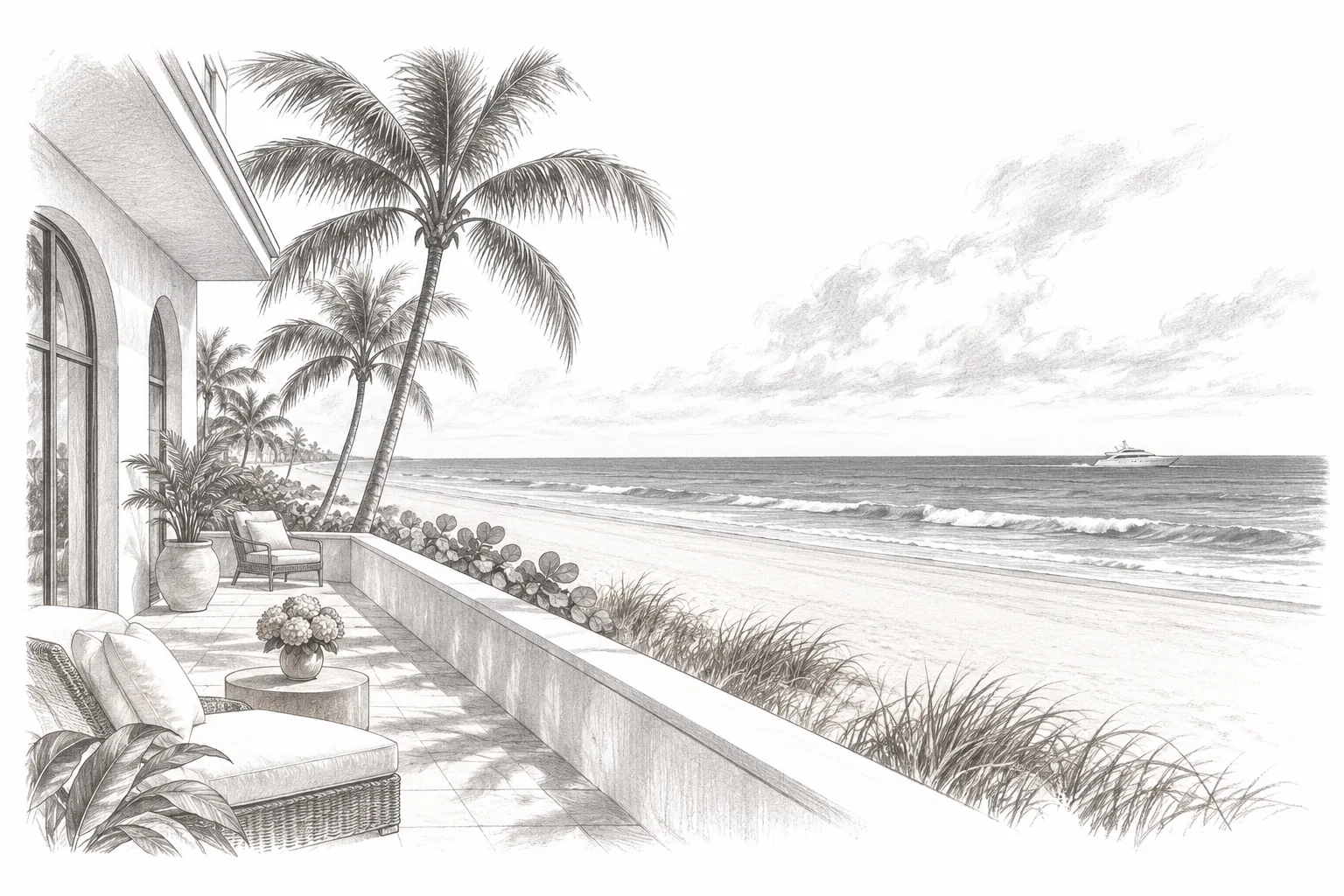
Oceanfront
How would you actually reach and use the beach from this home?

Bayfront
The view and the right to dock a boat are separate questions.
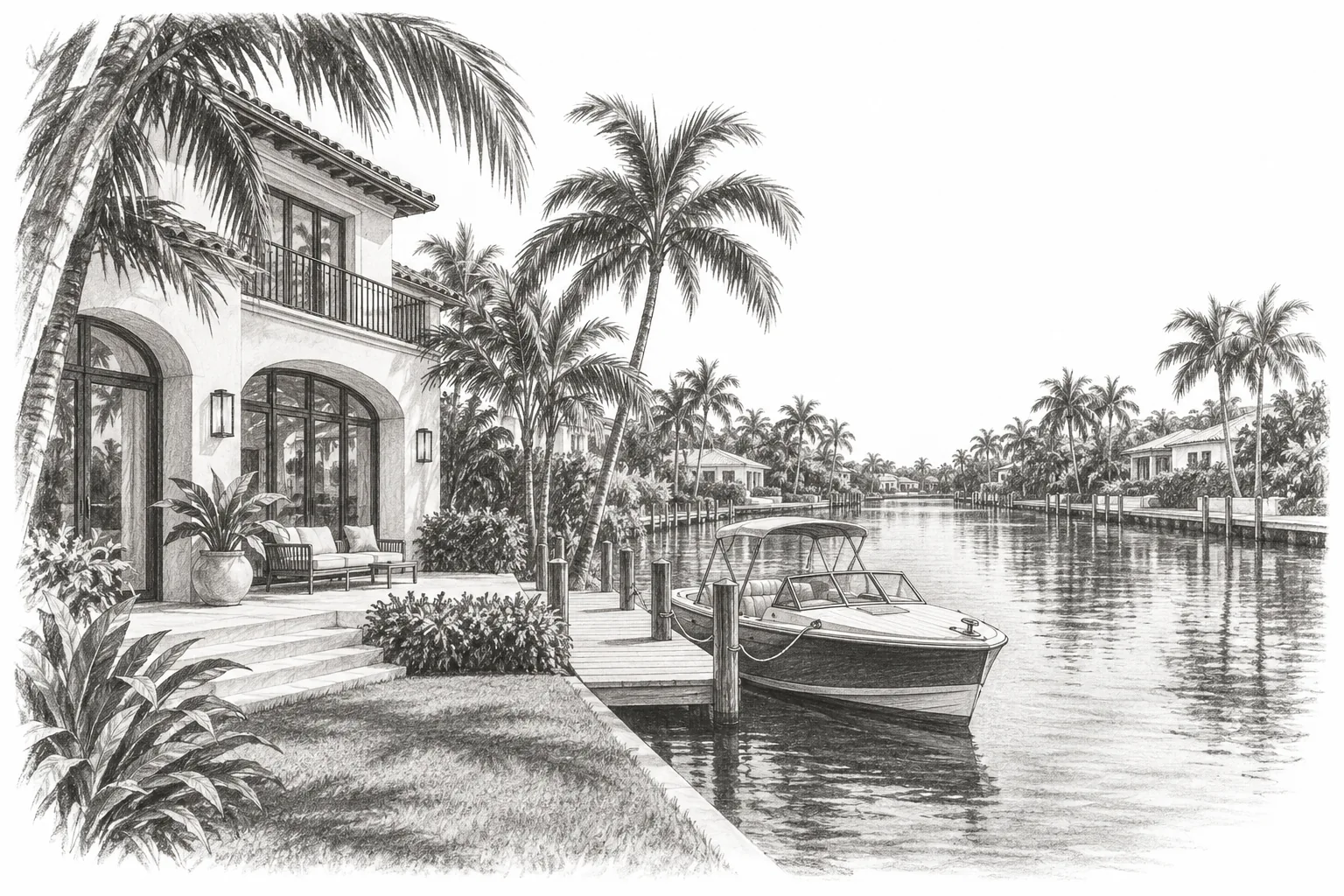
Canal-front
The dock and the entire route must suit the way you plan to boat.
Three ways of living beside the water. Use the drawings to picture the experience you want, then explore homes that offer it.
As you tour, keep four questions apart: Can I see the water? Can I reach it? May I use the beach, dock or marina? Can my boat make the full journey? The first answer may be visible from the terrace. The other three come from rules, property records and a route review.
Explore the setting
Map where your search could begin
Now use the map to choose where the search might begin. Turn on ocean, bay, canal or Intracoastal and compare the residential settings shown. The Intracoastal is a navigation corridor, so I have kept it separate from the smaller canals.
These points help you locate possible waterfront settings. After selecting an area, place each candidate address on the map and check its actual access.
The base map requires an internet connection. The area list below remains available.
South of Fifth
Ocean · Bay
At the southern end of Miami Beach, choose the side and the exact address. “SoFi” alone does not tell you which water a home faces.
Bal Harbour
Ocean · Intracoastal
Compare the ocean coast with the western waterfront and inspect each residence’s actual position.
Sunny Isles Beach
Ocean · Intracoastal
The strip between the two waters gives you two distinct searches within one city.
Edgewater
Bay
Start with homes facing Biscayne Bay. Review views and any marina rights building by building.
Coconut Grove
Bay
Explore the Dinner Key waterfront for bay and marina life without assuming a slip comes with a home.
Coral Gables
Canal · Bay
Research its waterways and Biscayne Bay frontage separately. Verify a dock and route parcel by parcel.
Map sources and limits
These are orientation points near waterfront sectors, not official boundaries or property coordinates. The water types were checked against Miami Beach, Sunny Isles Beach, Bal Harbour Village, City of Miami waterfront plans, its Edgewater bayfront work and Coral Gables waterways, reviewed November 2, 2026. Base map: USGS The National Map. Points show no depths, bridges, parcel jurisdiction, beach access, dock rights or slip availability.
Decision tool
Use the same test for all three
With that Saturday in mind, use the same questions for every home. The table shows which features to look for and which documents to request before a view becomes a reason to buy.
| Setting | Best starting point when you want | What to check for water use | Upkeep and key records |
|---|---|---|---|
| Oceanfront | Beach and an open horizonSee how you get from the residence to the beach and which outdoor spaces you would use. | Read the building or community rules for access, amenities and beach use. If you also want a boat, investigate dockage separately. | Request the governing documents, fees and maintenance responsibilities. Check the exact address in the county’s flood map. |
| Bayfront | A daily relationship with the bayA terrace, privacy and separately arranged marina access may be the right combination. | If a dock or slip is advertised, request the document stating who may use it, for which vessels and for how long. | Find out who cares for the seawall, dock or shared facilities. Request recorded documents, association rules and applicable permits. |
| Canal-front | Leaving from home in your own boatStart here when that is a must-have, then test each property. | Review the dock, maneuvering room and entire route to your destination, including depth, bridge clearance and restrictions for your boat. | Request dock and seawall plans and permits, work history, association rules and a qualified assessment of their present condition. |
For coastal work in Miami-Dade, consult the county’s Class I permit guidance and environmental records. To frame boating questions, use NOAA’s electronic nautical charts. Once you choose a home, review its own records and route.
If you want to boat, start with the boat
If boating is central to the plan, write down the boat first. A lovely dock will not help if your vessel cannot fit there or leave by the route you want. Those measurements can remove unsuitable homes before you spend time on tours.
Record its overall length, beam (width), draft (how deep it sits below the water) and height if bridges are involved. Add where it would stay, who would operate it and whether leaving from home is essential. There is no universal “boat size that fits a canal.” The dock, tides, route and rules all matter.
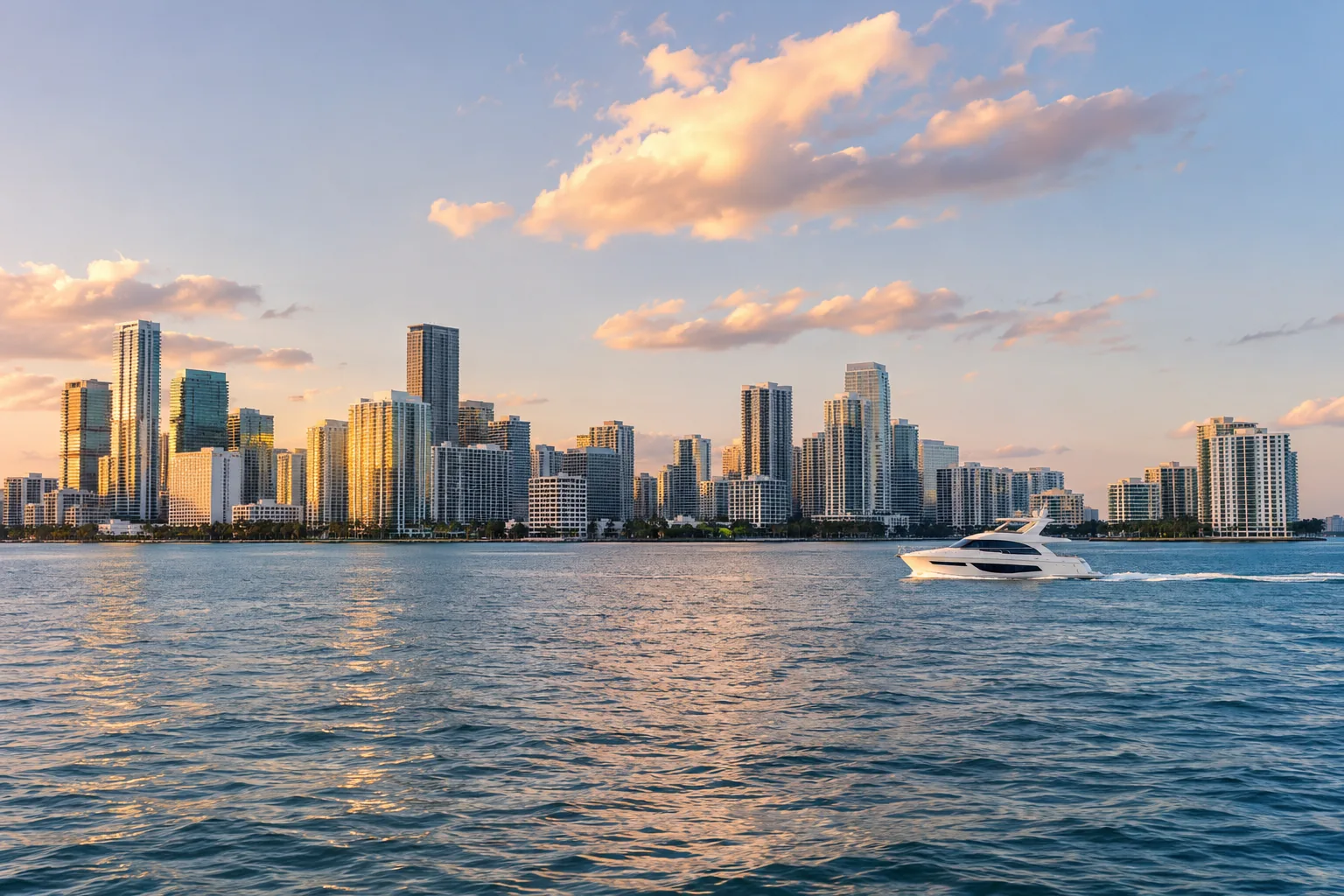
Write the dimensions
Use the vessel’s actual specifications, not a broad label such as “small yacht.” Include the lift or dock setup you would need.
Trace the whole trip
Ask a qualified marine professional to assess the dock, water depth, bridge clearance and route for that vessel and current conditions.
Read what you can use
A visible dock or neighboring marina does not prove an ownership right, transferable slip or permitted structure.
Price the responsibility
Have the dock and seawall reviewed, ask about past work and establish what the owner or association must maintain.
NOAA’s electronic charts can help you frame route questions; NOAA’s guidance explains why a web viewer is not a navigation instrument. Use current charts and a competent local professional for a real voyage.
A choice you can make now: if leaving from home is nonnegotiable, remove a property that offers only a view. If you would rather enjoy the water without managing a private dock, a bayfront residence and a separately confirmed marina arrangement may fit your life better.
Before a serious visit, ask for proof in this order
When a property looks promising, ask for the records behind the water access. They will tell you whether to keep it on the visit list and which local professionals should examine it with you.
- Identify the exact parcel. Start with the address or folio in Miami-Dade Property Search. Tax information helps identify a property but may lag recorded changes.
- Find out what the purchase includes. Request the deed, easements and any recorded instrument concerning a dock or water use. Search the county clerk’s official records. Have a real estate attorney interpret the rights that apply to this transaction.
- Request waterfront work records. Miami-Dade generally requires a Class I permit before work in, on or over tidal waters or coastal wetlands, subject to stated exceptions. Ask for dock, boat lift and seawall plans and permits, plus any municipal or state approvals that apply. Review the county guidance and Florida DEP process.
- Check current condition. Ask a qualified inspector or engineer to examine the dock and seawall and explain likely work. A permit for past construction does not certify the structure’s present condition.
- Check the exact address for flood exposure. Use Miami-Dade’s flood zone map, then obtain property-specific insurance quotes. A map zone alone is neither a policy price nor a complete risk assessment.
- Read current association and marina rules. Establish whether a slip is owned, assigned, leased or waitlisted; which vessels it accepts; who maintains it; and whether the arrangement transfers to a buyer.
If water access is the reason to buy, a missing essential document is a reason to pause that candidate until it is resolved.
The address shapes life around the water, too
From there, look at the life around each address. The Ivan and Mike neighborhood guide introduces Coconut Grove, Coral Gables, Miami Beach and other areas. The listing and property records will tell you whether a particular home has the beach access, dock or route you want.
Coconut Grove illustrates the difference between living near a marina and having a slip. The City of Miami places Dinner Key Marina in the Grove. On November 2, 2026, the city’s application section said its annual slips were full and openings would be filled from a size-based waiting list. It directs short-term inquiries to the marina by phone. If a marina arrangement is essential to your home search, confirm availability and contract terms before a property makes your shortlist.
Privacy and upkeep matter as well. Notice how you arrive, how exposed the terrace feels, where guests gather and who maintains the waterfront edge. A canal house can make boating wonderfully immediate and bring more maintenance; a bayfront apartment may suit you better if the boat stays elsewhere.
Decide what to tour and what can wait
After the first review, put each home on one of three lists: visit, revisit after a document arrives or remove. Add a sentence explaining why. Your shortlist will then reflect the way you intend to enjoy the water.
The main use fits
The home supports the life you want, and enough records are available for a focused visit and specialist review.
Another arrangement may work
The home or view is compelling, but boating depends on a marina or agreement whose access and terms still need confirmation.
A must-have is missing
There is no evidence of an essential right, the route cannot support the intended use, or the upkeep does not fit the life you want.
My rule is simple: pay for the experience you can actually use, not the one a photograph suggests. If the boat matters, build the shortlist around its dimensions and your route. If the real dream is an ocean morning without a private dock, start with homes that provide that life and treat the boat as a separate decision.
Your next step
Write down your ideal use of the water, three conditions you will not compromise on and the responsibility you are willing to take on. Then explore the South Florida neighborhood guide and request properties that fit, with the relevant records before booking serious visits.
Search from the way you want to live
Tell us whether you want the beach, a bay view or to leave by boat from home. If you have a vessel, include its dimensions and usual destination. That gives the search a useful starting point.
Sources and scope
Public records and operator information were reviewed November 2, 2026. The sources below support the general guidance. For a home you may buy, review its address, title, permits, rules, current charts and physical condition with the appropriate professionals.
- Miami-Dade County, Class I Environmental Permit and DERM Environmental Records: coastal work and record searches.
- Florida Department of Environmental Protection, ERP e-Permitting: potential state authorizations and exemptions.
- NOAA Electronic Navigational Charts and NOAA FAQ: chart information and web-viewer limits.
- Miami-Dade County Flood Zone Maps: address lookup and flood-map scope.
- Miami-Dade Property Search and Clerk Official Records: parcel identification and recorded instruments.
- City of Miami, Dinner Key Marina: location and waitlist process as displayed on the review date.
- Ivan and Mike, Florida Neighborhoods and the broader waterfront guide: related reading with a different scope.