
My recommendation: Begin in Bal Harbour if Bal Harbour Shops and Village activities would regularly shape your visits. Begin in Surfside if you picture a stay built around the beach, tennis, the Community Center and the shops along Harding Avenue. In either town, choose the building only after you know who will prepare and care for the apartment between trips.
Picture your next arrival. You land, go upstairs and want the home ready so your time away can begin. Now picture leaving: you close the door and may not return for weeks. The first scene helps you choose the neighborhood. The second helps you choose the property. Let us take them in that order.

Explore the setting
Where are Bal Harbour and Surfside?
Start by locating them. Surfside sits immediately south of Bal Harbour; they share a boundary. Many of the places you might enjoy are accessible from either town. The difference becomes clearer when you test the trip from an actual building. Filter the towns and destinations on the map, then add the addresses you plan to tour.
The base map needs an internet connection. The destination list remains available below.
Bal HarbourSurfsideB and S pins mark reference destinations.
Bal Harbour Shops
Luxury shopping and dining. Ask the operator separately about any membership.
Waterfront Park
Village park and programs. Check owner card and access requirements.
The Surf Club
Restaurants and spa on Collins Avenue. Reserve through the hotel.
Community Center
Pool and town programs. Confirm resident identification.
96th Street Park
Park, court and kayak launch, subject to current rules and hours.
The pins identify the places discussed here. Add each candidate building to compare its actual route. Destinations: Bal Harbour Shops, Bal Harbour Village, The Surf Club and Town of Surfside. Base map: OpenStreetMap.
Map source and limits
Town boundaries are requested from Miami-Dade County MunicipalityCoastal. Destination coordinates are orientation points. The map does not establish a parcel boundary, a precise travel time or a particular building’s services.
Life around the address
What would you actually use in each town?
With the towns in view, imagine a free afternoon and an ordinary morning. Where would you go for dinner, groceries, a beach walk or tennis? These are specific places you can test from each building you tour.
Bal Harbour
| Category | Where to begin | What to check |
|---|---|---|
| Shopping and dining | Bal Harbour Shops has luxury stores and restaurants. | The route from your building and reservations you would make. A Shops membership is not included with every residence. |
| Park and activity | Waterfront Park offers walking, fitness areas and programs. | The All Access Card. Property owners may be eligible even if they spend less than six months a year here; application and documents are required. |
| Beach | The 102nd Street path serves cardholders; individual buildings have their own routes. | The entrance you would use, building rules and the walk from your unit. |
| Arrival groceries | Publix at Surfside, 9400 Harding Avenue, is a nearby option outside Bal Harbour. | Your route, delivery options and whether the building can receive groceries before you arrive. |
Surfside
| Category | Where to begin | What to check |
|---|---|---|
| Shopping and dining | The local-scale Harding Avenue business district and The Surf Club restaurants. | Which places fit your routine and which restaurants require a reservation. |
| Park and activity | Community Center, 96th Street Park and Veterans Park. | Resident identification for the pool and programs, hours and availability. Read the town’s conditions. |
| Beach | Town access at 88th and 96th Streets and the Community Center path where applicable. | The most useful entrance from your building, guest rules and any beach setup your residence provides. |
| Arrival groceries | Publix at Surfside, 9400 Harding Avenue. | The trip from your unit and whether deliveries can be accepted or held. |
Your time away
Which experiences might become part of your stays?
A nearby club or spa matters when you would actually use it. Choose the activities that count most, then check how you gain access. That tells you what the town offers and what your building must provide separately.
A morning at Waterfront Park
If pickleball appeals to you, the park lists sessions on its multipurpose court. Check the current schedule and apply for the All Access Card if eligible before making it part of your plans.
Tennis or a swim near home
The Tennis Center and Community Center pool offer two ways to spend the morning. Check resident identification, reservations and hours before choosing a building for its proximity.
An afternoon at The Surf Club
For a special visit, The Surf Club spa is an option in Surfside. Treatments are booked with the hotel. It adds to the area without becoming a service of every nearby condominium.
If golf, padel or a private club is central to your calendar, add the membership terms, availability and route from each building to your property comparison.
A place to begin
Which town would I tour first?
Once you identify the places you would actually use, the search becomes more focused. Start in the town that best suits your stay and keep a candidate in the other town as a meaningful comparison.
If your returns include the Shops and Village
Find two apartments that make those outings easy. Ask what each building does while you are away and how to apply for the All Access Card.
If you favor a beachside routine
Choose two buildings and walk the route to the beach, tennis, Community Center and your regular shopping. In each, learn what happens to the apartment while you travel.
If one property takes too much managing
Try a different residence before abandoning the town. A beautiful address is less compelling if access, inspections and a response to problems cannot be arranged in a way that suits you.
With four buildings on the table, the question changes. You can now compare how each home would feel and how it would be cared for.
A fair comparison
Four buildings, one set of criteria
Take these rows to your tours. We have covered the neighborhood differences; now focus on what changes from one front door to another. Ask for the same information in both towns and record the answer for each apartment.
| Criterion | Bal Harbour | Surfside |
|---|---|---|
| Arrival | From each address, test the entrance, parking and route to the places you would visit after landing. | Run the same test, including your usual Harding Avenue shopping. Publix at Surfside is at 9400 Harding. |
| Beach | Find your building’s route and likely entrance. The 102nd Street path is tied to the All Access Card. | Walk toward the town access points and ask what beach service the building actually provides. |
| Daily life | List the stores, restaurants and Village activities you would use and how you would reach them. | Do the same for Harding Avenue, tennis, Community Center and any Surf Club reservation. |
| Privacy and space | Review the floor plan, views into the unit, terraces, storage, parking spaces and guest circulation. | Apply exactly the same criteria. The answer depends on the unit and building. |
| Between visits | Ask in writing who may enter, how often the unit is checked and how you hear about a problem. | Request the same scope in writing. If the building does not offer it, price a local service. |
| Family and guests | Read rules on entry, pets, parking, amenities and overnight guests. | Read the same rules. Ask how guests are registered and assisted when you are away. |
| Annual cost | Add dues, insurance, utilities, potential assessments and unit-care services. | Use the same period and categories so the comparison remains fair. |
Leave any decisive unanswered item open on that property’s record. Use the next visit to resolve it before narrowing the list.
Picture your arrival
How would each return feel?
The table organizes the facts. Now imagine that you have chosen an apartment in each town and arrive on a Thursday afternoon.
In Bal Harbour
You drop off your luggage and head to dinner near Bal Harbour Shops. The next day you want a walk through Waterfront Park or time at the beach. If that sounds like your stay, make the actual trip from the building. Then return to the apartment and ask how it would be prepared ahead of your next flight.
In Surfside
Perhaps your first morning begins by the ocean and continues with tennis or a quick stop on Harding Avenue. If you spend several weeks here, that rhythm may matter more than a view you only enjoy from the terrace. Make the same trip from the second building and compare how easily you could return to a ready home.
These scenes help you decide where to tour first. The particular address and its services will settle the choice.
A tool for part-time owners
Luxury also lies in how the home works
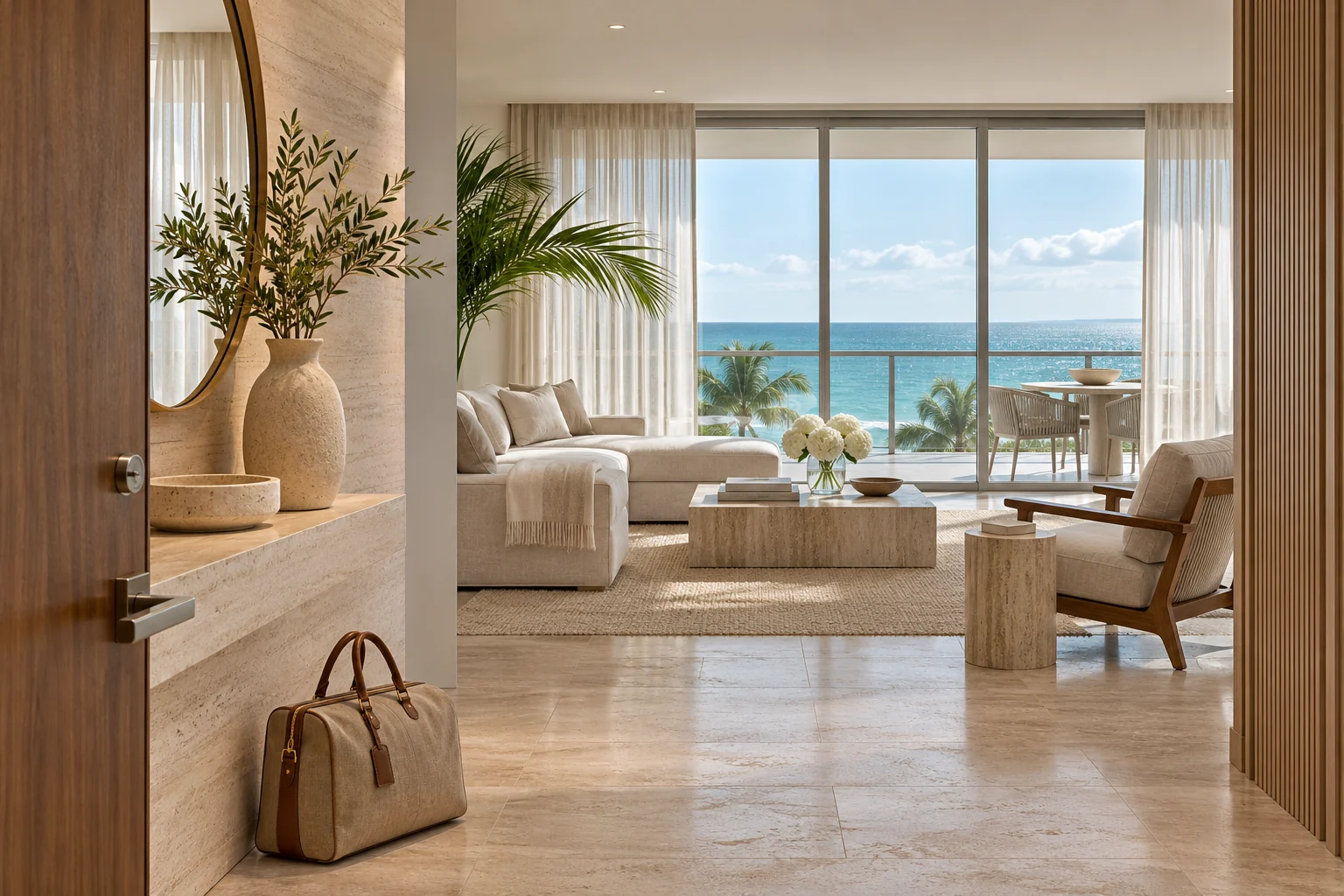
A second home still needs attention when you close the door. Before choosing a building, find out what its team handles and what you would need a trusted local person to manage. Settle that during the purchase and each return becomes easier.
For each task, write down who owns it, how they report to you and what it costs. Get the building’s scope in writing and cover any gap with a local provider.
Who can enter the apartment?
Decide who keeps keys, approves entry and records each visit. Include emergency access, cleaners and contractors.
Request: building access rules and service agreement. Cost: keyholding or callout fees.
A clear inspection rhythm
Agree on interior visits, what will be checked and how a photo report reaches you. A lobby attendant may not inspect the inside of your unit.
Request: written checklist and frequency. Cost: monthly or per visit.
Prepare for storms and heat
Clarify who secures the terrace and windows, monitors equipment and reports on the unit afterward.
Request: building protocol and local provider plan. Cost: possible intervention fees.
Packages, mail and third-party entry
Decide whether deliveries are received, stored or forwarded. Check the policy for household staff, designers, contractors and guests while you are away.
Request: reception and guest rules. Cost: handling or storage fees.
A rule for approving expenses
Set a spending limit and an approval channel. Establish who obtains bids, oversees the job and sends evidence when it is complete.
Request: management or provider contract. Cost: fees and work billed separately.
A home ready before the flight
Arrange a pre-arrival visit for cleaning, temperature, water, internet and essential equipment. Separate what you need from optional comforts.
Request: arrival checklist and named contact. Cost: confirm charges per visit.
Rules for sharing the home
Read the conditions for guests, children, pets, parking and shared spaces. If you might lend or rent the home, review that scenario too.
Request: current declaration and rules. Cost: possible registration fees.
Payments that continue without you
Review dues, insurance, reserves, special assessments and unit maintenance. Decide who monitors notices and due dates during your absences.
Request: current budget, statements and policies. Cost: annual and event-based.
The Florida condominium regulator identifies declarations, rules, management contracts, insurance, accounts, reserve studies and applicable inspection reports among official records. Use those records to confirm the duties of a particular building and unit.
What it costs to have the home ready for your return
The budget does not end with the purchase. Divide it into three parts to compare apartments clearly: the cost of owning, attention while you are away and experiences you choose during a stay.
Association dues, taxes, unit insurance, utilities, maintenance and possible special assessments.
Inspections, response to problems, cleaning and preparation before you return.
Optional services, activities and memberships you genuinely expect to use.
Ask for an annual estimate of the first two groups for each unit. If one building includes a task in its dues and another charges separately, you can see the difference without guessing what “service” means. Keep the third group separate because it follows your own habits.
For dues, rules, insurance, reserves and assessments, start with the records identified by Florida DBPR. Complete the figures only for actual candidate properties.
While you travel
What should happen between departure and return?
Suppose you leave Miami for six weeks. To have the home waiting in good condition, arrange three moments with the building or someone you hire.
Before you close the door
Confirm the plan for the terrace, air conditioning, water and keys. Authorize who may enter and how much they may spend on a repair without waiting for you to be available.
While you are away
Agree on a frequency for interior checks and the report you will receive. If there is a leak or equipment fails, know who enters, photographs the problem and coordinates the work.
Before your return
Arrange a preparation visit: cleaning, temperature, internet, water and access. That final check helps your flight end in a home ready to enjoy.
Reception may help with some of this, but the scope varies by building. Ask for it in writing before choosing the apartment.
What if none of the four buildings feels right?
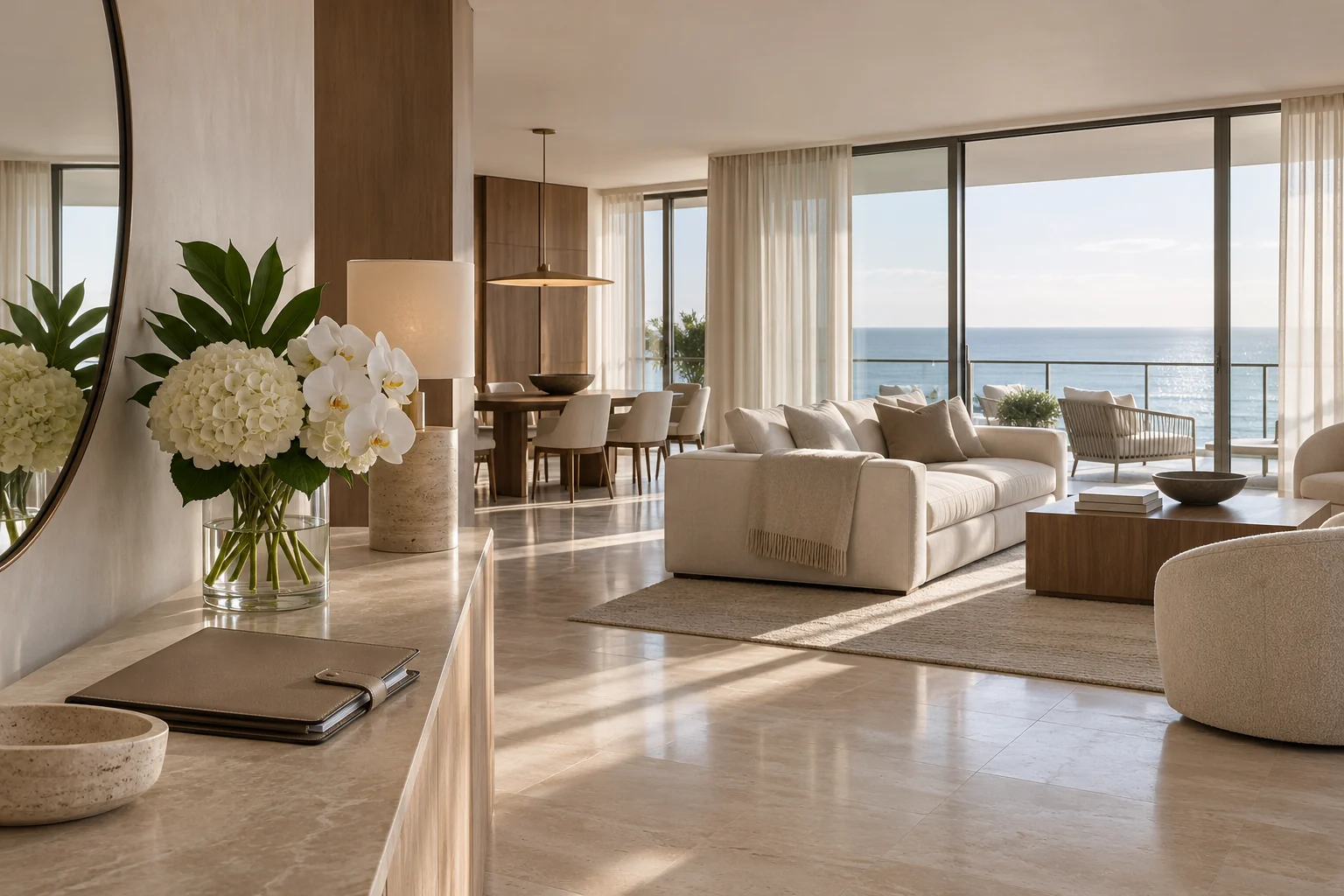
First, try another building in the town you prefer. A floor plan, guest rule or inadequate service may be the problem, and another property a few blocks away may solve it.
Expand to another area only when you can name the improvement you need: greater privacy, a different layout, another way to care for the home or a daily rhythm these addresses cannot offer. The list then grows for a reason and remains manageable.
Two ways to use a second home
Consider two calendars. One leaves little time for each visit; the other allows a family to settle in for several weeks. That difference changes the search.
Short, frequent trips
A couple returning for several weekends each year wants to arrive, go out to dinner and use every hour. If Bal Harbour Shops and Village activities are their regular destinations, I would begin in Bal Harbour. Between two well-located apartments, I would choose the one with a clear arrival-preparation plan and simple help during an absence.
Longer family stays
Another family spends full weeks in Miami. They enjoy the beach, tennis and a routine close to local shops. I would begin in Surfside, confirm access to the activities they care about and compare two buildings that make that life convenient. A Bal Harbour apartment would remain in the mix if it better served their space and home-care needs.
Answers that help narrow the list
Must I live in Bal Harbour year-round to use Waterfront Park?
Not necessarily. The Village says property owners may apply for the All Access Card even when they live there less than six months a year. You need to submit the required documents and receive approval.
What access can a Surfside second-home owner expect?
The Town explains how owners establish residency for the Community Center and programs. Check the identification and conditions for the activity you plan to use.
Will the front desk inspect my apartment?
That depends on the building and service agreement. Ask in writing whether staff can enter, how often the unit is checked and what happens when something goes wrong. Arrange separate help if the building does not provide it.
Could I rent out the home when I am away?
Before relying on that possibility, read the condominium and municipal rules for the particular address and type of stay. If allowed, calculate the related costs and obligations separately.
What would I do next?
Choose two buildings in each town, tour those best suited to your calendar and request the same records from the finalists. You can then decide among real homes with their services and costs in view.
How I would organize the visits
- Define your calendar: how often you will come, how long you will stay and how many weeks the apartment may sit empty.
- Choose four candidates: two comparable apartments in Bal Harbour and two in Surfside. Request floor plans, orientation, parking and storage details.
- Test your routine: from each door, walk the beach route and visit the shops and destinations you would actually use.
- Request the absence plan: who enters, how often they check, how they report and who prepares the home before you return.
- Read the records: condominium rules, dues, budget, insurance, potential assessments and the flood map for the address.
Separate properties you can compare now from those still missing important information. Use a second visit to answer what could genuinely change your choice.
Build a shortlist around the way you travel
Tell us how you would spend your time in Miami, how long the apartment would be empty and what you would want settled before each return. We can use that context to find apartments that suit the way you use the city. You can also explore more areas in our South Florida neighborhood guide.
Sources and scope
Public sources reviewed November 3, 2026. Town and operator pages support the facts about boundaries, parks, access and destinations. The recommendations organize a second-home search; confirm any particular home’s services and costs with its current documents.
- Town of Surfside, About the Town: location, business district and general facilities.
- Surfside Parks & Recreation FAQ, Parks Information and Beach Information: access, parks and beach.
- Bal Harbour Village, All Access Card and Waterfront Park: eligibility and municipal amenities.
- Bal Harbour Shops: shopping and dining information.
- Four Seasons at The Surf Club, Dining and Spa: hospitality in Surfside, with no implied condominium access.
- Florida DBPR, Condominium FAQ: categories of official records for due diligence.
- Miami-Dade County, Flood Zone Maps: address-level flood-map lookup.
- Miami-Dade MunicipalityCoastal: town boundaries for the map.
- Publix at Surfside: reference grocery address.
- OpenStreetMap: base map and attribution. The map does not measure travel times or establish property-level rights.