
Miami FIFA World Cup 2026
When the FIFA World Cup 2026 kicks off this June, Miami won’t just be a host city. It will be the center of the world’s attention for nearly six weeks, and the effects on South Florida’s luxury real estate market are already being felt.
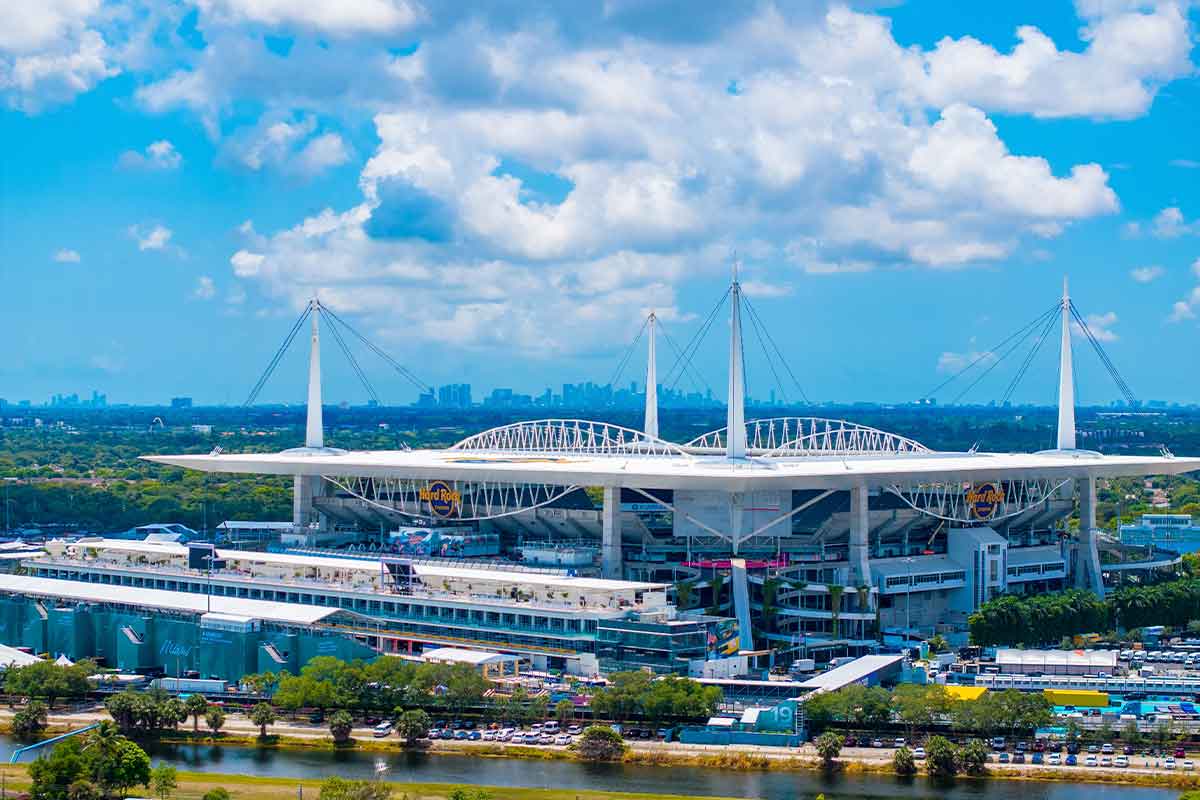
Hard Rock Stadium is scheduled to host seven matches, including a quarterfinal and the Bronze Final on July 18, more than almost any venue in the entire tournament. The matchups are some of the most globally watched on the schedule: Brazil vs. Scotland on June 24 and Portugal vs. Colombia on June 27 have already generated the highest short-term rental booking numbers of any games in the entire tournament. For a city that already leads the United States in foreign home buyer volume, that level of global exposure isn’t just a tourism story. It’s a real estate story.
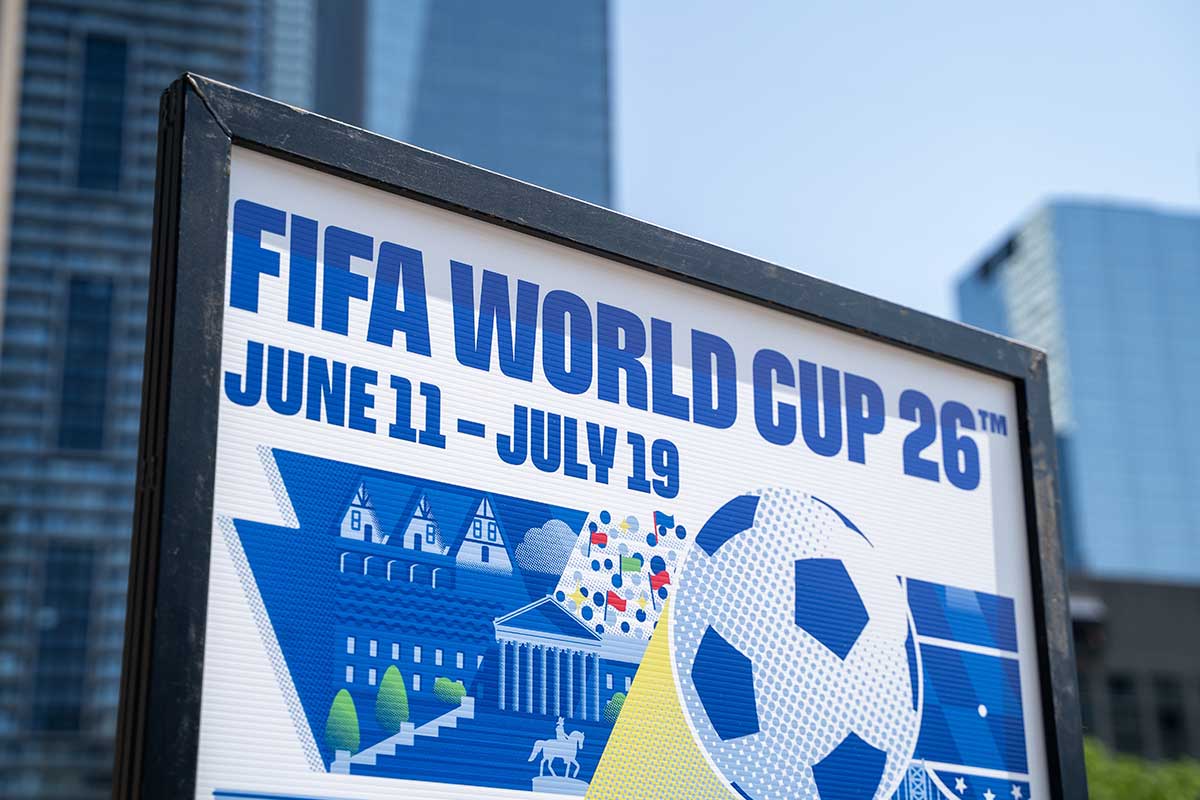
Why the 2026 FIFA World Cup Matters for Miami Real Estate
The 2026 tournament is unlike anything that has come before it. With 48 teams and 104 matches spread across 16 cities in the U.S., Mexico, and Canada, it is structurally the largest World Cup in history, and the U.S. alone is expected to host approximately 1.24 million international visitors, of which 742,000 represent trips that would not have occurred otherwise.
Miami’s position within that influx is outsized. The American Hotel & Lodging Association found that nearly 80% of hotel bookings across host markets were running below initial forecasts, yet Miami stood out as a stronger market, with 55% of respondents reporting booking pace ahead of expectations. That divergence matters. It signals that the visitors coming to Miami are a self-selecting group: international travelers with money to spend, time to explore, and a genuine connection to the region.
The economic case for Miami’s advantage goes beyond match days. FIU Business professor Deanne Butchey noted that while past World Cups in Qatar, Russia, and Brazil delivered short-term boosts from visitor spending and broadcasting revenue, the longer-term value lies in how the host city uses the moment to strengthen its brand, infrastructure, and visitor economy. Miami, uniquely, is already executing on that strategy. FIFA itself opened a 60,000-square-foot operational headquarters in Coral Gables, relocating over 100 staff from its Zurich offices, cementing the city’s role not just as a host, but as a global soccer hub. And 2026 brings even more: Miami will also host the G20 Summit in December, reinforcing its status as a geopolitical and economic center with a projected $500 million economic injection from that event alone.
No city in the country is absorbing this level of simultaneous global visibility.
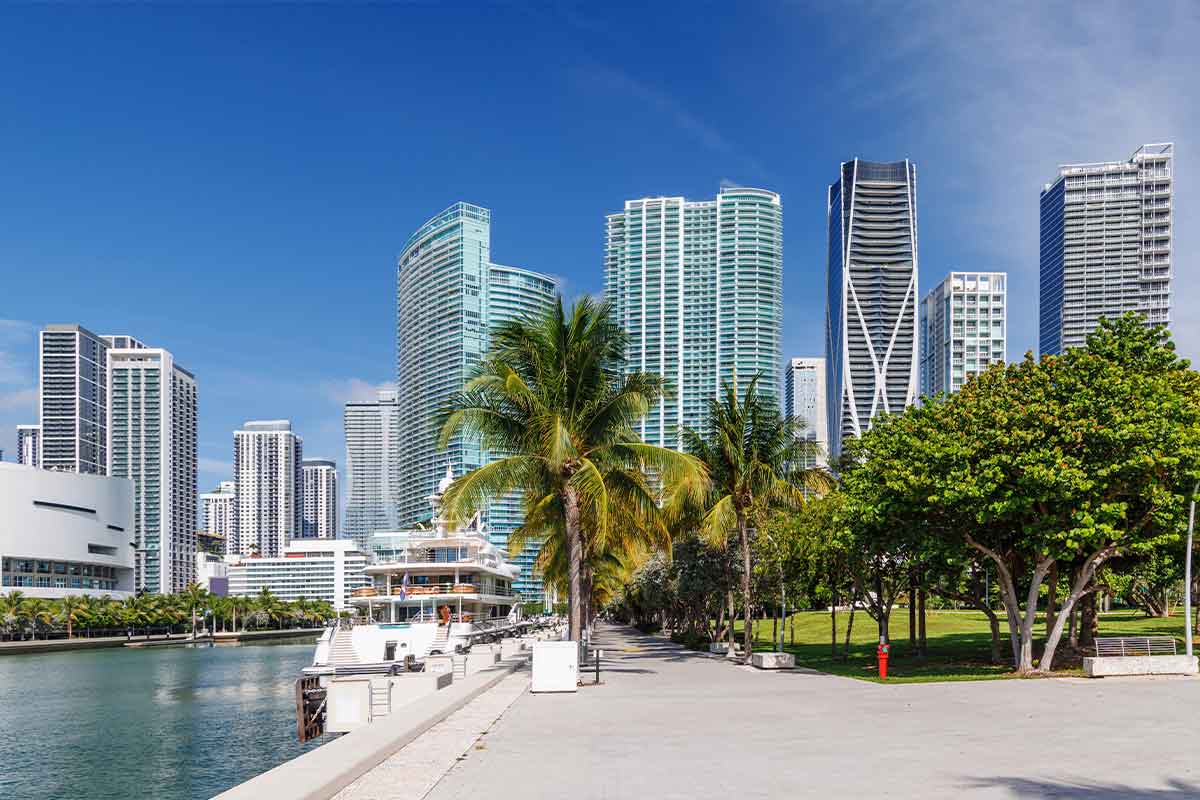
The Short-Term Rental Opportunity
South Florida’s short-term rental market is already reacting. Demand for Airbnb and similar platforms in Miami has jumped 159% compared to the same period last year, making it the top-performing U.S. host city after the Mexican markets. Total Airbnb host earnings across World Cup host cities are projected to reach nearly $156 million, averaging approximately $4,000 per host, or $262 per night.
For property owners, and investors who position themselves now, this window is significant.
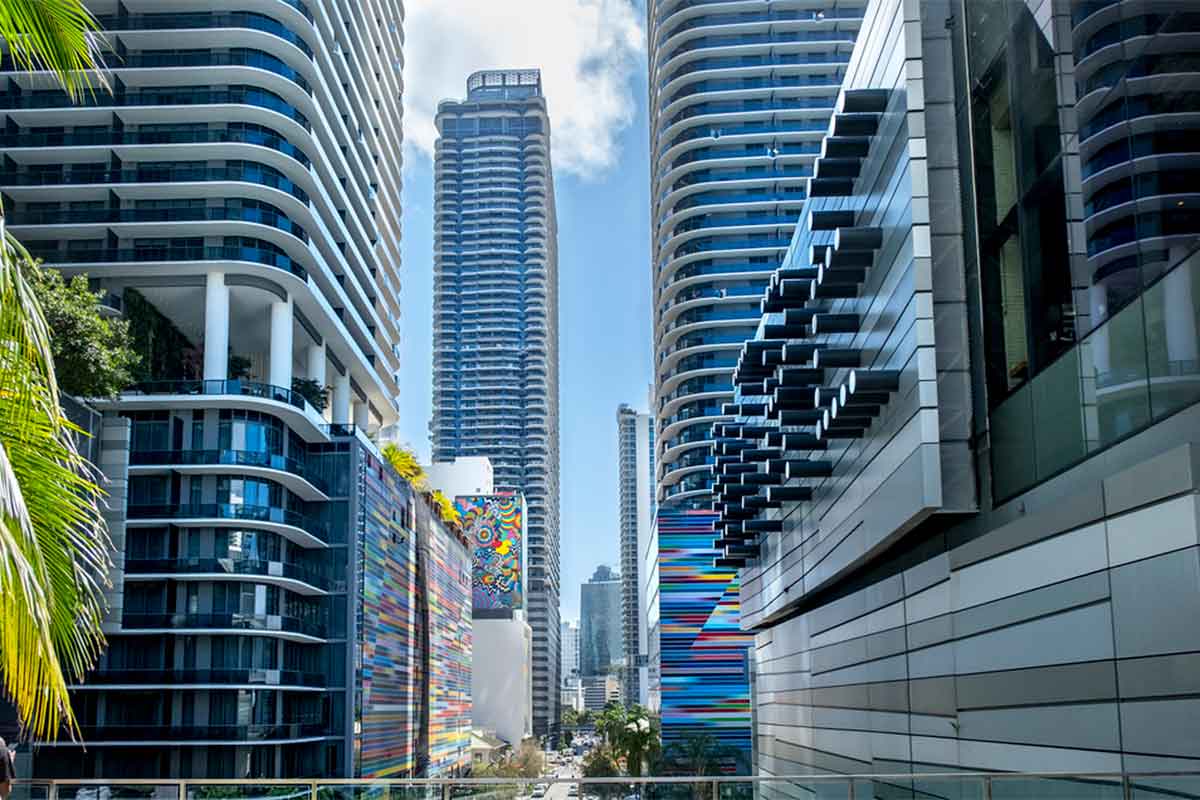
Brickell sits within easy reach of Hard Rock Stadium and is the natural hub for international fans who want walkability, rooftop access, and the kind of urban energy that doesn’t exist at a suburban hotel. Condo owners here are already reporting premium short-term rental rates.
Downtown Miami and Edgewater are drawing attention for their waterfront views and proximity to Brickell City Centre and Wynwood. Edgewater average condos run approximately $793,000, offering a more accessible entry point for investors while still commanding strong rental premiums during high-demand periods.
Miami Beach remains the aspirational address for high-spend international visitors. The average sale price in Miami Beach luxury transactions reached approximately $4.6 million, with the market skewing toward condos, roughly 60% of transactions, which make them ideal short-term rental vehicles.
Sunny Isles Beach, often called the “Russian Riviera” for its historically strong Eastern European buyer base, is seeing renewed interest from a broader set of international visitors drawn to its oceanfront towers and proximity to both Fort Lauderdale and Miami.
The average booked nightly rate in the Miami–Fort Lauderdale market for group-stage match dates is approximately $296 per night, already the third highest among all host cities. As knockout-round dates approach, including Miami’s quarterfinal on July 11 and the Bronze Final on July 18, rates in premium properties are expected to climb significantly.
Working with the right advisors before rates peak can mean the difference between capturing this window and watching it from the sidelines. The Ivan & Mike Team helps investors and homeowners position their properties for maximum rental performance ahead of major market events. Connect with us today.
Luxury Real Estate Could See Increased Global Exposure
There is a well-documented phenomenon in global real estate: visitors become residents. The exposure that comes with hosting a World Cup doesn’t end when the final whistle blows.
Foreign buyers already invested a record $4.4 billion in South Florida residential real estate in 2025, a 42% jump from the prior year. International purchasers now account for roughly 15% of all residential dollar volume in the Miami metro area, and an extraordinary 52% of new-construction and pre-construction sales.
Latin American buyers remain the dominant force. Colombia leads all foreign buyers for the third consecutive year, accounting for 15% of all foreign transactions, while Argentina holds second place at 12%, followed by Mexico and Brazil at approximately 7% each. With Portugal vs. Colombia and Brazil vs. Scotland both scheduled at Hard Rock Stadium, the Latin American buyer cohort is particularly primed: their national teams are playing, their communities are traveling, and the city they often consider their second home is on the world stage.
European investors are equally active. Paris saw foreign real estate interest surge by more than 70% in the lead-up to the 2024 Summer Olympics, a preview of what sustained international exposure can do to buyer behavior.
The Middle Eastern capital is increasingly visible in Miami. The 2026 Miami Economic Forum featured a dedicated panel on the Miami–GCC capital corridor, exploring why Gulf sovereign wealth funds and private investors view South Florida as a strategic hub connecting Latin America, North America, and the broader Middle East. Saudi Arabia is playing Uruguay in Miami on opening weekend, a detail that won’t be lost on Saudi investors already circling South Florida’s luxury condo market.
Many of Miami’s strongest investment opportunities are identified long before major events begin. The visitors who arrive for the World Cup will leave having spent days in these neighborhoods, walking the streets, eating at the restaurants, staring at the skyline from their balconies. For a meaningful share of them, that experience will trigger a serious conversation about buying.
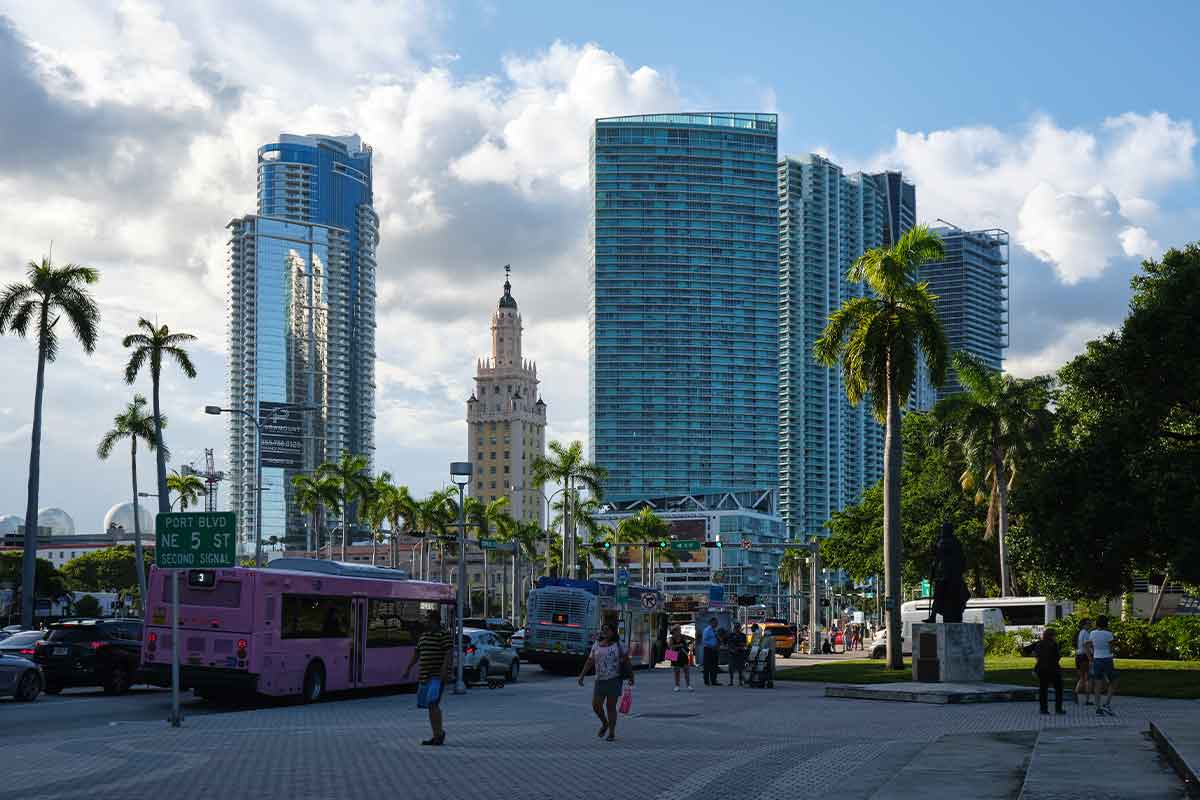
Top Miami Neighborhoods That Could Benefit the Most
Brickell
Miami’s financial district has matured into one of the most sophisticated urban cores in the Americas. High-rises, luxury condos in Brickell, world-class dining, and the Brickell City Centre retail complex define its energy. It attracts a professional, finance-oriented buyer who values walkability and rental liquidity. In Q1 2026, the luxury market in Miami posted a 21% increase in sales and 15.6% growth in dollar volume, and Brickell averaged $666 per square foot with premium towers well above that mark. The neighborhood is a prime candidate for short-term rental demand during match weeks given its connectivity and nightlife.
Miami Beach
Miami Beach real estate operates in a category of its own. Ultra-luxury single-family transactions on exclusive barrier islands like Indian Creek, where Mark Zuckerberg purchased a $170 million estate and Larry Page acquired two mansions for $173 million, reflect a buyer profile that transcends market cycles. For World Cup visitors, Miami Beach will serve as the backdrop to the city’s most photographed moments. As of December 2025, Miami overtook New York City as the major U.S. metro with the most million-dollar listings, 10,591 vs. 10,176. That inventory lives largely in Miami Beach.
Coconut Grove
Coconut Grove is the neighborhood for buyers who want Miami’s lifestyle without its volume. The most historically rooted community in Miami, the Grove offers tree-lined streets, bay-front estates, top-tier private schools, and a boutique luxury residential pipeline anchored by architecture-forward projects. For second-home buyers and relocating executives seeking privacy alongside prestige, Coconut Grove offers something Brickell cannot, quiet. A $135 million Coconut Grove mansion recently secured a buyer, signaling continued demand at the trophy tier.
Coral Gables
The address of choice for international families and the diplomatic class, Coral Gables earned even more global recognition when FIFA chose it for its North American headquarters. For buyers from Latin America and Europe who want a permanent residence, not just a pied-à-terre, Coral Gables delivers top public and private schools, walkable restaurant rows on Miracle Mile, and a sense of permanence that reflects its City Beautiful planning heritage. The G20 Summit’s selection of adjacent Doral is projected to drive 14% appreciation in premium Coral Gables properties.
Key Biscayne
Key Biscayne remains one of the most exclusive addresses in the United States, an island community minutes from downtown Miami with strict height limits, a finite supply of homes, and a resident profile that includes heads of state, hedge fund principals, and tech billionaires. It is not a neighborhood for speculative investors. It is a neighborhood for buyers who intend to stay. Supply constraints and zero developable land make it one of the most durable appreciating assets in South Florida over any meaningful horizon.
Edgewater
The fastest-evolving neighborhood in Miami’s urban core, Edgewater sits between Brickell and Wynwood, offering Biscayne Bay waterfront access, a walkable waterfront park, and a development pipeline that includes some of the most design-forward towers in the city. Pre-construction pricing in Edgewater averages around $793,000, significantly below comparable luxury new construction in Brickell, with appreciation fundamentals that developers and institutional buyers are actively targeting.
Could Property Values Rise After the World Cup?
The answer, historically, is yes, but context matters.
According to Goldman Sachs data, host cities average approximately 2.5% property value appreciation in the years following a major global sporting event, and in the luxury sector, those gains can run significantly higher.
London is the benchmark example: Newham, which hosted the 2012 Olympic Village, saw property prices rise more than 400% over two decades, more than double the national average. Paris experienced luxury neighborhood price increases of roughly 22% in the lead-up to the 2024 Games. Since the 2000 Sydney Olympics, Australian real estate data showed median prices grew 38.5% in the two years post-event and 66.4% within three years. Since 2004, property per square meter has increased by an average of 17% in Olympic host cities. Super Bowl host cities have shown sustained high-end real estate growth driven by infrastructure upgrades, global exposure, and a halo of desirability that lingers long after the event.
Miami’s structural advantage, however, is that it doesn’t need the World Cup to justify its value trajectory. Pre-construction luxury condos have already posted 12–18% year-over-year price appreciation in Q1 2026, and single-family home prices are projected to grow approximately 4% by year-end. The World Cup amplifies a trend already in motion.
Supply constraints are critical. Active listings for condos above $10 million across the tri-county area dropped from 284 in October 2024 to just 104 one year later. Luxury single-family home sales above $3,000 per square foot have surged 3,300% since 2018. Into that compressed inventory base, the World Cup delivers a surge of internationally qualified buyers who are seeing the city live, in person, for the first time.
More than 1,350 new residents arrive in Florida every day. That underlying population engine doesn’t pause for global events, it accelerates with them.
The investors who profit most from events like the World Cup don’t wait for kickoff. They acquire, position, and prepare. The Ivan & Mike Team specializes in identifying value-aligned opportunities before market attention peaks. Schedule a private consultation.
How Investors Are Positioning Themselves Before 2026
The most sophisticated buyers in Miami’s market right now are not waiting for World Cup week to act. They are using the event as a confirmation signal for acquisitions already in motion.
Pre-construction condos remain one of the most effective vehicles. Miami pre-construction buyers who committed in 2019–2024 achieved 30–80% appreciation in many projects. Today, new launches in Brickell and Edgewater are pricing at $1,350 per square foot and above for flagship branded residences. Flexible deposit structures, typically 40–50% spread across construction milestones, allow investors to deploy capital efficiently while locking in today’s pricing before delivery-era valuations take hold.
Waterfront properties are in a category of sustained scarcity. Roughly 12% of Miami’s new development pipeline is oceanfront, yet these projects account for more than 50% of total sales volume. The arithmetic of limited supply and concentrated demand is self-evident.
Rental-focused acquisitions, particularly in Brickell, Edgewater, and Downtown, are attracting investors who want World Cup week income while building toward long-term appreciation. The combination of a 159% surge in short-term rental demand and Miami’s position as the third-highest nightly rate market among U.S. host cities makes these assets immediately income-generative.
Not every opportunity tied to the World Cup will be obvious to the public. Some of the most attractive positions involve off-market listings, developer relationships, and neighborhood-specific knowledge that doesn’t surface on Zillow or Realtor.com. That is where local expertise creates an edge that price data alone cannot replicate.
Why Local Expertise Matters More Than Ever
Global events compress timelines. They surface latent demand. And they tend to reward those who understood the market before the cameras arrived.
Miami’s luxury market is not monolithic. The difference between a strong acquisition and a costly mistake often comes down to which building, which floor, which line, and which neighborhood is genuinely positioned for what comes next. Working with experienced local advisors helps investors separate hype from durable long-term value.
The Ivan & Mike Team has guided luxury buyers, international investors, and relocating executives through South Florida’s market at every stage of its evolution. From pre-construction sourcing to off-market negotiations, from investment property structuring to relocation planning for high-net-worth families, the team brings the market fluency that matters when the stakes are high.
Miami is hosting the world this summer. The investors who will look back on 2026 as a defining moment are the ones who acted with clarity, speed, and expert counsel, before the noise of match week made everything harder to read.
Whether you’re buying your first Miami property, adding to a portfolio, or exploring short-term rental income during the World Cup window, this is the conversation to have now. Contact the Ivan & Mike Team for private, no-pressure guidance tailored to your objectives.
About Ivan & Mike
Ivan Chorney and Michael Martirena are the founders of The Ivan & Mike Team at Compass Florida, one of the most distinguished luxury real estate teams in the United States. With more than $2 billion in closed transactions, they are recognized among the Top 10 Medium Teams in the U.S. by RealTrends and #1 in New Construction Sales in Miami.
Ivan & Mike are celebrated for their deep market intelligence, developer partnerships, and discreet, relationship-driven approach. Their clients include UHNWIs, CEOs, athletes, and global investors seeking strategic acquisitions across South Florida.
Their mission is simple:
“We connect extraordinary people with extraordinary properties, delivering not just a transaction—but a lifestyle.”
Their insights have been featured in The Real Deal, Forbes México, Mansion Global, Inman, and The Wall Street Journal, positioning them as architects of Miami’s luxury lifestyle.
📍 Based in Coconut Grove, Miami, FL 📞 (305) 907-7948 📧 ivan.chorney@compass.com** | **mike.martirena@compass.com 🌐 www.ivanandmike.com
Is Miami a good city to invest in real estate ahead of the 2026 FIFA World Cup?
Yes. Miami is hosting seven World Cup matches, including a quarterfinal and the Bronze Final. The city is already seeing a 159% surge in short-term rental demand and leads the U.S. in foreign home buyer volume, with $4.4 billion in international residential investment recorded in 2025 alone.
Which Miami neighborhoods offer the best short-term rental opportunities during the World Cup?
Brickell, Edgewater, and Downtown Miami are closest to the event ecosystem and offer the highest walkability and urban amenities. Miami Beach commands the highest nightly rates. All four are strong options depending on your target guest profile and investment budget.
Can foreign buyers purchase real estate in Miami before or during the World Cup?
Absolutely. Foreign nationals can purchase Miami real estate with minimal restrictions. Many developers actively welcome international buyers in pre-construction projects, and approximately 51% of international transactions in South Florida are all-cash closes.
How have other major sporting events historically affected host city property values?
The data is broadly positive. Goldman Sachs research shows host cities average 2.5% property appreciation post-event, while luxury markets often outperform significantly. London’s Olympic boroughs saw prices rise 98–122% in the decade following the 2012 Games. Paris luxury properties appreciated 22% in the lead-up to the 2024 Olympics.
What is the best way to find investment-grade Miami properties tied to the World Cup opportunity?
Work with advisors who have direct access to pre-construction pipelines, off-market listings, and neighborhood-level data. The public-facing market captures only a portion of what’s available. Local expertise, and relationships, are the real competitive advantage.